What Is Edge Computing? How Does It Differ from Cloud Computing?

 09.14.2026
Edge computing is a computing approach that enables data to be processed closer to its source without being sent to a centralized cloud server. In this article, we will explore what edge computing is, how it works, its advantages, and how it differs from cloud computing.
What is Edge Computing?
Edge computing, also known as “uç bilişim” in Turkish, aims to process data as close as possible to the point where it is generated. This means that not every piece of data needs to be sent to a centralized data center.
Today, sensors, smart devices, cameras, vehicles, and industrial machines continuously generate data. Sending all of this data to a remote server can create certain limitations in terms of time and network resources.
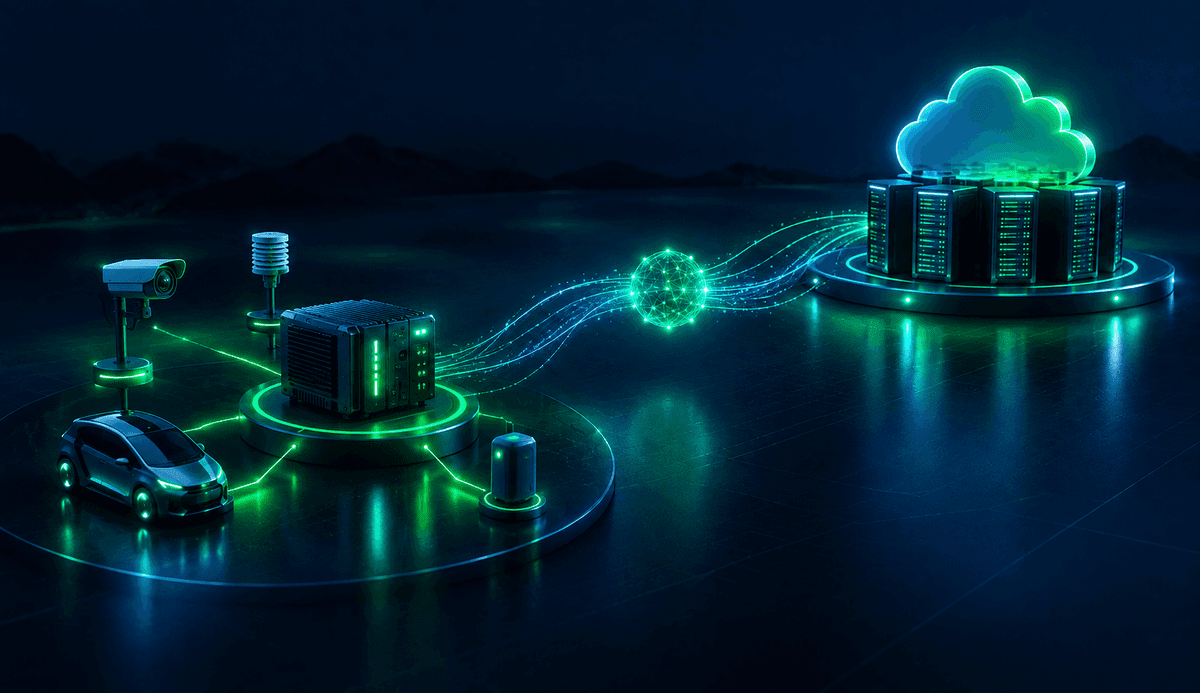
With edge computing, an edge device, gateway, or local server can be used close to the device or location where the data is generated. The data can be processed locally, while only the necessary results are sent to centralized systems.
How Does Edge Computing Work?
In an edge computing architecture, part of the processing workload between the data source and the central data center is moved closer to the edge. This approach works by first directing the data generated by devices to nearby computing resources.
For example, sensors in a factory can continuously monitor the condition of machines. Edge systems can analyze this data locally and help trigger a rapid response when an abnormal condition is detected.
In general, the process works as follows:
- Data generation: A sensor, camera, or IoT device generates data.
- Local processing: The data is processed on an edge device or server close to the source.
- Decision-making: The required analysis or automated action can be performed locally.
- Transfer to a central system: Data that needs to be stored or analyzed in greater detail can be sent to the cloud or a centralized data center.
This approach allows central systems to work with only the data that is actually needed.
What Are the Advantages of Edge Computing?
One of the key advantages of edge computing is the ability to process data close to its source. This can be particularly important for applications that require fast responses.
Other advantages may vary depending on the system and use case:
- Lower latency: Since data does not always need to travel to and from a remote server, some operations can be performed more quickly.
- Bandwidth savings: Instead of transferring all data to a central system, only the necessary information can be transmitted.
- Greater resilience to connectivity issues: In environments with limited internet connectivity, local processing capabilities can help systems continue operating.
- Real-time applications: It provides a suitable architecture for systems that require real-time data processing.
- Scalability: It can help distribute the data processing workload in IoT environments where large numbers of devices generate data.
What Are the Use Cases of Edge Computing?
Edge computing can be used in various fields where large amounts of data are generated or rapid decisions are required. Its use cases have expanded particularly with the growing adoption of IoT devices.
Smart factories, autonomous systems, smart city applications, healthcare technologies, retail, and telecommunications are some examples. For instance, instead of sending all the footage from a security camera to a centralized server, certain analyses of the footage can be performed locally.
Some areas where edge computing can be used include:
- IoT systems: Processing data from sensors locally
- Smart cities: Evaluating data from traffic and environmental sensors
- Manufacturing: Monitoring machines and production processes in real time
- Autonomous systems: Rapidly processing data collected from their surroundings by vehicles or robots
- Retail: Analyzing data collected from devices inside stores
- Telecommunications: Performing certain network traffic processing tasks closer to users
What Is the Difference Between Edge Computing and Cloud Computing?
Edge computing and cloud computing do not necessarily have to be alternatives to each other. In fact, many modern systems use both approaches together.
In cloud computing, data and applications are generally processed using resources located in centralized or distributed data centers. Edge computing, on the other hand, moves part of the computing power closer to where the data is generated.
The key differences can be summarized as follows:
| Feature | Edge Computing | Cloud Computing |
|---|---|---|
| Data processing | Close to the source | On centralized/remote servers |
| Latency | Can generally be lower | Depends on the application and connection |
| Internet dependency | Can be lower for certain operations | Access to centralized resources is important |
| Data transfer | Necessary data can be selectively transferred | More data may be sent to centralized systems |
| Use cases | Real-time and local processing | Large-scale storage and comprehensive processing |
This distinction does not mean that one approach is universally “better” than the other. The appropriate architecture depends on the requirements of the application.
Can Edge Computing and Cloud Computing Be Used Together?
Yes. Edge and cloud computing can be complementary technologies used together. While the edge layer handles fast and local processing, the cloud can take on tasks such as comprehensive data analysis, storage, and centralized management.
For example, in a smart factory, sensor data can first be analyzed on edge devices. Abnormal conditions can be identified quickly, while selected data can be stored in the cloud for long-term analysis.
This approach brings both local processing and centralized data management together within the same architecture.
Why Is Edge Computing Important?
The growing number of connected devices and the increasing volume of generated data are making the question of where data should be processed more important. Processing data close to its source can provide significant advantages, especially for applications that require real-time responses.
However, edge computing is not simply a hardware-related approach. It requires software, network infrastructure, data management, and security to be considered together.
By bringing computing power closer to where data is generated, edge computing offers different solutions for challenges such as latency, data transfer, and scalability. Rather than completely replacing cloud computing, it can work alongside it. As IoT, smart cities, manufacturing, and real-time applications continue to grow, the importance of edge computing is expected to increase.