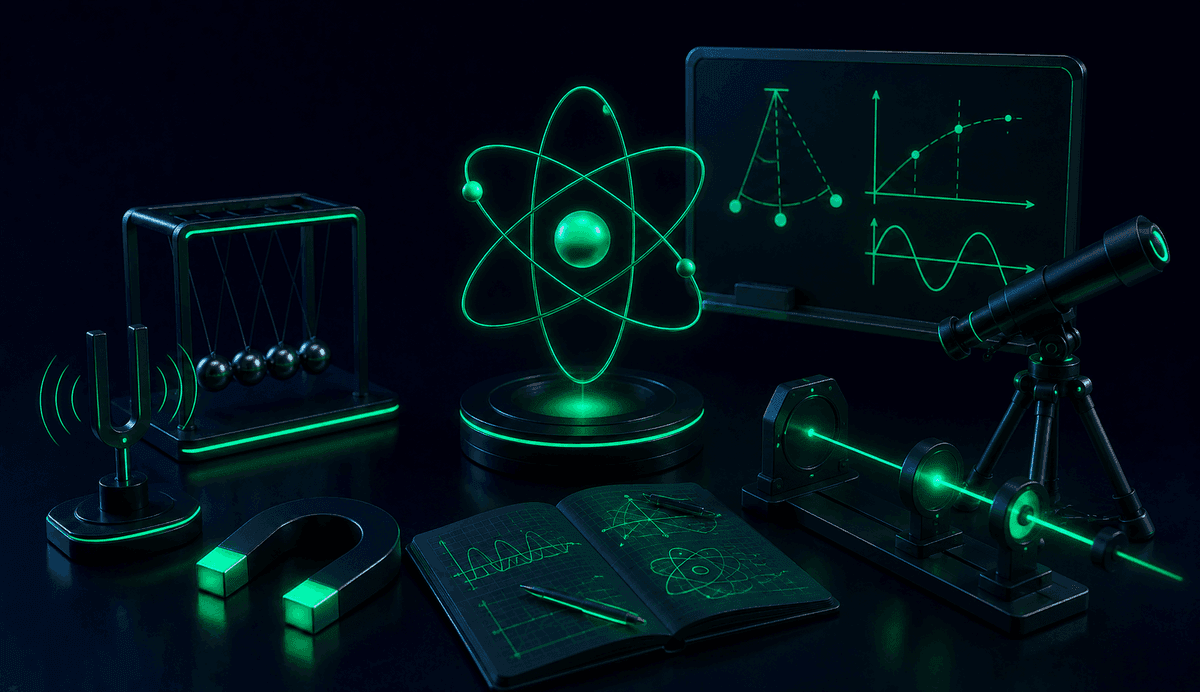
What is the Physics Teacher Training Department? What do its graduates do?

 07.16.2026
What Is the Physics Education Program? How Can You Become a Physics Teacher?
Have you ever wondered how light travels, why celestial bodies move, or how electricity shapes our daily lives? Physics is one of the fundamental sciences that helps us understand the natural world. Physics teachers are not only responsible for teaching these concepts but also for helping students develop scientific thinking and analytical problem-solving skills.
So, what exactly does the Physics Education program cover? Where can graduates work? What does a Physics Teacher do, and what skills are needed to succeed in this profession? In this guide, you'll find everything you need to know—from the educational journey to career opportunities.
What Is Physics Education?
The Physics Education program is a bachelor's degree designed to prepare educators who can teach physics using modern instructional methods. Throughout the program, students build a strong academic foundation in physics while also receiving pedagogical training for the teaching profession.
The program focuses not only on transferring scientific knowledge but also on preparing teachers who can conduct experiments, encourage critical thinking, and inspire scientific curiosity among their students.
Graduates are qualified to work in public schools, private schools, tutoring centers, and various educational institutions.
How Long Is the Physics Education Program?
The Physics Education program is generally offered as a four-year bachelor's degree. During their studies, students complete a comprehensive curriculum that combines physics courses with educational sciences.
The program typically includes training in:
- Physics
- Mathematics
- Educational Sciences
- Teaching Methods
- Assessment and Evaluation
- Teaching Practice
During the final year, students complete supervised teaching practice, gaining valuable classroom experience in real educational settings.
What Courses Are Included in the Physics Education Program?
Course offerings may vary between universities, but the core curriculum generally includes:
- Mechanics
- Electricity and Magnetism
- Optics
- Modern Physics
- Thermodynamics
- Atomic and Nuclear Physics
- Mathematics
- Differential Equations
- Educational Psychology
- Principles and Methods of Teaching
- Measurement and Evaluation
- Classroom Management
- Educational Technologies
- Teaching Practice
- History of Science
Laboratory courses also provide students with hands-on experience in planning, conducting, and interpreting physics experiments.
What Are the Admission Scores for the Physics Education Program?
Admission scores and rankings for the Physics Education program vary each year depending on university quotas, the number of applicants, and placement results.
For this reason, there is no fixed admission score. Prospective students should consult the latest university entrance guide and compare previous years' rankings before making their choices.
When selecting a university, applicants should also consider educational quality, laboratory facilities, and the scope of teaching practice opportunities—not just admission scores.
What Should You Consider When Choosing a Physics Education Program in 2026?
Students planning to enroll in the Physics Education program in 2026 should look beyond university rankings alone.
Important factors to consider include:
- Faculty members' experience
- Quality of physics laboratories
- Teaching practice opportunities
- Erasmus and exchange programs
- Educational technology infrastructure
- Graduate employment outcomes
- Scientific research and project opportunities
Universities offering extensive practical teaching experience can provide a significant advantage in preparing students for the profession.
What Do Physics Teachers Study and Specialize In?
A Physics Teacher continues learning long after graduation. As educational technologies and teaching methods evolve, lifelong learning remains an essential part of the profession.
Common areas of specialization include:
- Physics Education
- STEM Education
- Astronomy
- Robotics and Coding Education
- Educational Technologies
- Science Olympiads
- Assessment and Evaluation
- Project-Based Learning
- Science Education
- Digital Learning Tools
Following scientific publications and learning innovative teaching methods also contribute to ongoing professional development.
Universities Offering Physics Education Programs in Türkiye
Physics Education programs are offered by both public and private universities. Program availability and enrollment quotas may change over time.
Prospective students should review the latest university entrance guide to determine which universities currently offer the program.
When choosing a university, it is beneficial to evaluate factors such as:
- Faculty of Education structure
- Laboratory facilities
- Partner schools for teaching practice
- Scientific research opportunities
- Graduate success
Considering these factors together can help students make more informed decisions.
How Can You Become a Physics Teacher?
To become a Physics Teacher, students must first graduate from a Physics Education bachelor's program. After graduation, candidates must meet the legal and professional requirements in effect at the time and follow the recruitment procedures established by public or private educational institutions.
Successful Physics Teachers typically:
- Possess strong knowledge of physics
- Communicate effectively
- Demonstrate patience and a supportive teaching approach
- Plan and conduct experiments
- Use digital educational technologies
- Stay informed about modern teaching methods
- Continuously improve their professional skills
Participating in science projects and volunteer educational activities during university can also provide valuable practical experience.
What Does a Physics Teacher Do?
The responsibilities of a Physics Teacher may vary depending on the institution, but the core duties generally include:
- Planning and delivering physics lessons
- Preparing laboratory experiments and practical activities
- Monitoring students' academic progress
- Conducting examinations and assessments
- Encouraging scientific thinking
- Developing educational materials
- Communicating with parents
- Guiding students toward science projects and competitions
- Integrating educational technologies into the classroom
- Participating in professional development activities
Physics teachers are not only instructors but also mentors who inspire curiosity and foster scientific inquiry.
Career Opportunities and Challenges in Physics Education
Career opportunities for Physics Teachers extend beyond public schools. Graduates can pursue careers in various educational and technology-related fields.
Potential workplaces include:
- Public schools
- Private schools
- Colleges
- Tutoring centers
- Study centers
- Online education platforms
- Educational technology companies
- Science centers
- Educational publishing
One of the profession's biggest challenges is adapting teaching methods to accommodate diverse learning needs. Keeping up with educational technologies and continuously updating lesson content are also important aspects of the role.
How Much Does a Physics Teacher Earn?
It is difficult to provide a fixed salary figure for Physics Teachers because compensation varies depending on several factors.
Salary levels may differ based on the type of institution, years of experience, job responsibilities, location, and additional duties. Naturally, a newly qualified teacher will have different earning potential than an experienced educator who has taken on leadership roles or contributed to educational projects.
Compensation policies also vary among public institutions, private schools, and other educational organizations.
Final Thoughts
The Physics Education program offers a strong career path for individuals who are passionate about teaching science and helping students develop analytical thinking skills. By combining subject expertise with pedagogical knowledge, the program prepares graduates not only for classroom teaching but also for careers in educational technology, science communication, and diverse learning environments.
Teachers who continuously improve their skills, integrate technology into education, and inspire scientific curiosity will continue to play a vital role in shaping the future of education.
Ready to begin your journey as a Physics Teacher? Explore the latest Physics Teacher job opportunities on Techcareer.net, stay up to date with developments in education and technology, and start building a career that aligns with your goals today.