What Is an AI Agent? How AI Agents Work, Types, Use Cases, and the Future

 09.09.2026
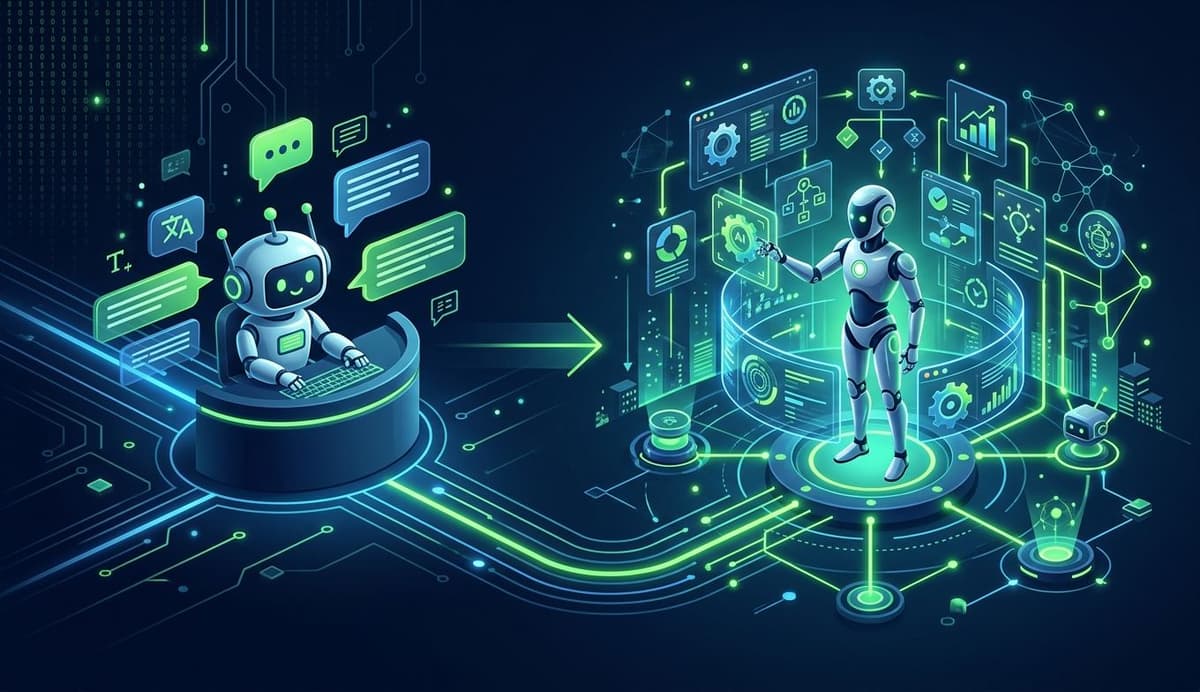
Artificial intelligence technologies are rapidly evolving from simple chatbots to AI Agents that can independently plan and execute tasks. In this article, you can explore the concept of AI Agents, how they work, their use cases, and how they differ from traditional chatbots.
What Is an AI Agent?
An AI Agent is an artificial intelligence system that can analyze its environment, make decisions, and use different tools when necessary to accomplish a specific goal. Unlike traditional AI applications, it does not simply respond to commands. It can also plan a process and create new steps when needed.
AI Agents can work with advanced language models, external software, and automation systems to make many business processes more efficient.
What Is the Difference Between a Chatbot and an AI Agent?
Chatbots have been used for years in areas such as customer service, information sharing, and user support. However, AI Agents can take on much more comprehensive tasks than simply answering questions.
The key differences include:
- A chatbot primarily responds to incoming questions.
- An AI Agent can create a task plan based on a defined goal.
- A chatbot generally focuses on a single interaction.
- An AI Agent can manage multiple steps in a process.
- A chatbot typically has limited integration with external systems.
- An AI Agent can work with different applications and services.
- A chatbot provides information.
- An AI Agent can take action based on information.
These capabilities have enabled AI Agents to be used in increasingly complex processes.
How Do AI Agents Work?
An AI Agent follows a series of steps to accomplish a given goal. Throughout the process, it can update its plan and make different decisions based on newly acquired information.
The general workflow consists of the following steps:
- Analyzes the user's goal
- Collects the necessary information
- Creates a task plan
- Uses appropriate tools or systems
- Evaluates the results
- Plans additional steps when necessary
- Completes the task and presents the output to the user
This structure transforms an AI Agent from a system that simply follows commands into a goal-oriented assistant.
What Are the Core Components of an AI Agent?
Several components need to work together for an AI Agent to operate effectively. Each component contributes to the system's ability to make more accurate and informed decisions.
The main components include:
- Large Language Model (LLM)
- Memory management
- Planning mechanism
- Decision-making system
- External tool integrations
- Data collection mechanism
- Feedback evaluation system
Working together, these components enable more flexible and intelligent solutions.
What Are the Types of AI Agents?
Not every AI Agent is designed for the same purpose. Depending on the use case, AI Agents can take on different types of tasks.
Common types of AI Agents include:
- Personal assistant agents
- Software development agents
- Data analysis agents
- Customer service agents
- Cybersecurity agents
- Business process automation agents
- Research and reporting agents
Each type specializes in specific areas and addresses different needs.
What Are AI Agents Used For?
AI Agent technology has started to gain adoption across many industries. By automating repetitive tasks and accelerating processes, AI Agents can help reduce workloads for different teams.
Common use cases include:
- Software development
- Customer support
- Data analysis
- Content creation
- Project management
- Financial operations
- Human resources processes
- Digital marketing
- Educational technologies
- E-commerce operations
These use cases continue to expand as the technology evolves.
How Are AI Agents Used in Software Development?
Software development is one of the areas where AI Agent technology is being adopted most rapidly. Rather than simply providing code suggestions, AI Agents can support developers across an entire project.
For example, an AI Agent can:
- Analyze project files
- Detect coding errors
- Create test scenarios
- Prepare documentation
- Suggest code refactoring
- Automate specific tasks
This allows developers to focus more on strategic and complex problems.
What Are the Benefits of Using AI Agents?
When properly designed and implemented, AI Agents can significantly simplify business processes. Reducing repetitive tasks can be particularly effective in increasing team productivity.
Key benefits include:
- Saving time
- Automating processes
- Increasing efficiency
- Managing multi-step tasks
- Working with multiple systems
- Performing rapid analysis
- Providing personalized support to users
However, the outputs generated by these systems should always be reviewed by humans.
What Should You Consider When Using AI Agents?
Although AI Agents are powerful tools, proper configuration is essential. In particular, critical decisions should not be left entirely to automated systems.
Key considerations include:
- Verify generated results.
- Prioritize data security.
- Configure authorization and access controls properly.
- Do not completely remove human oversight from the process.
- Make sure the tools being used are up to date.
- Avoid unnecessary automation.
This approach enables more reliable and sustainable use of AI Agents.
What Will the Future of AI Agents Look Like?
Advances in artificial intelligence are continuously expanding the capabilities of AI Agents. In the future, these systems are expected to integrate with more applications, manage increasingly complex business processes, and evolve into digital assistants that work alongside teams.
AI Agents represent one of the next-generation applications of artificial intelligence. Going beyond traditional chatbots, these systems are transforming many industries through capabilities such as planning, analysis, and task management. When used effectively, they can provide significant productivity benefits for both individuals and organizations.