Steam Top-Selling Games: Türkiye and Worldwide 2026

 26.11.2026

Artificial intelligence is making human resources processes faster, more efficient, and more data-driven. From recruitment to employee experience, this technology is changing the way HR teams work. So, how is AI used in human resources, and which tools stand out?
What Is Artificial Intelligence in Human Resources?
Artificial intelligence in human resources refers to using AI technologies to plan, manage, and evaluate employee-related processes. This technology can be used in various areas, including candidate evaluation, resume screening, interview scheduling, employee development, and performance tracking.
AI-powered systems help reduce the workload of HR teams by analyzing large amounts of data. This makes it possible to automate repetitive tasks and allows teams to focus more on areas such as employee experience, talent management, and strategic planning.
However, using AI in human resources does not mean leaving all decisions to technology. Human oversight remains essential, especially in processes that directly affect people, such as recruitment and performance evaluation.
How Is AI Used in Human Resources?
AI can be used at different stages of the employee journey. From a candidate's initial application to their development after joining a company, it supports HR professionals in managing a wide range of processes.
1. Recruitment and Candidate Evaluation
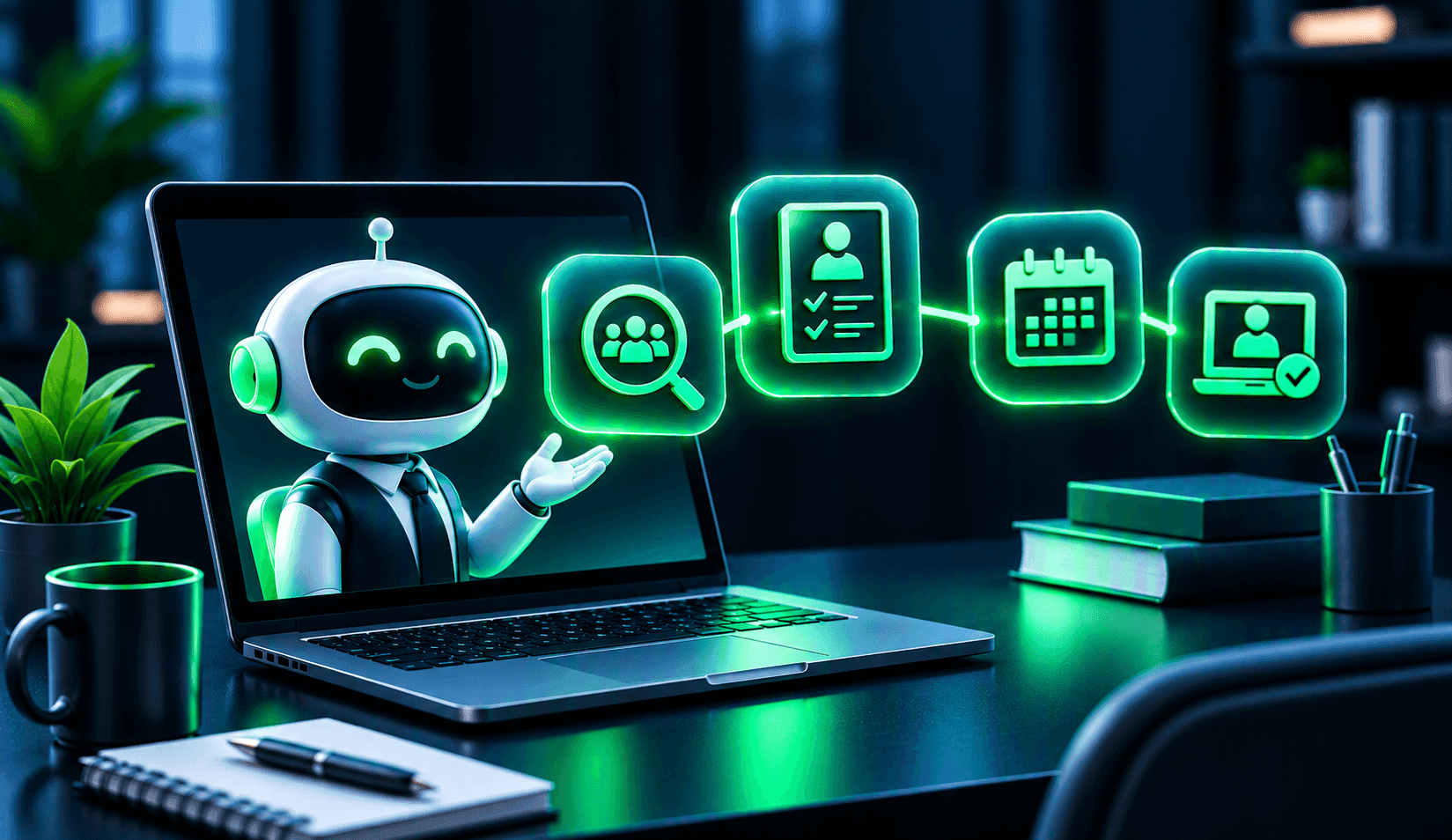
Recruitment is one of the areas where AI is most commonly used in human resources. In particular, AI-powered systems can help screen resumes, categorize candidate information, and match applications with relevant positions, especially when companies receive a high volume of applications.
These systems can provide several benefits:
- Identifying experience and skills listed in resumes.
- Categorizing candidate applications based on job requirements.
- Assisting with job description creation.
- Generating draft messages for candidate communication.
- Automating repetitive tasks throughout the application process.
Candidate matching results generated by AI should not be treated as final hiring decisions. Candidates' skills and experience should always be evaluated alongside human judgment.
2. AI-Powered Interview Processes
AI can be used in interview processes for tasks such as scheduling interviews, preparing questions, organizing interview notes, and analyzing candidate responses.
Some platforms allow candidates to complete interviews in a digital environment. These systems can collect responses to predefined questions and provide recruitment teams with insights to support the evaluation process.
However, it is important to consider the context when assessing candidates' communication skills, problem-solving approaches, and suitability for a position. Automated analysis should not replace human evaluation.
3. Onboarding and Employee Orientation
Onboarding is the process of helping new employees adapt to a company and their roles. AI can help make this process more organized and personalized.
For example, an AI-powered HR assistant can answer new employees' questions about leave policies, benefits, internal applications, and training programs. It can also create role-specific checklists and personalized learning recommendations.
This helps HR teams reduce repetitive information-sharing tasks. New employees can also access the information they need more easily.
4. Training and Development
Developing employees' professional skills is one of the key responsibilities of human resources. AI can help identify gaps between employees' existing competencies and their target skills, as well as recommend relevant training programs.
For example, if an employee aims to improve their data analysis skills, the system can recommend training materials suited to their current knowledge level. This makes it possible to create learning experiences that address different needs instead of relying solely on standardized training programs.
5. Performance and Employee Experience Management
AI can also be used to understand employee experience and support performance management processes. Examples include categorizing survey responses, summarizing employee feedback, and identifying trends over specific periods.
However, evaluating employee performance based solely on numerical data is not an appropriate approach. Factors such as an employee's responsibilities, working conditions, role within the team, and individual development should also be considered.
What Are the AI Tools Used in Human Resources?
The tools used in HR processes vary depending on the specific needs and functions. Some platforms focus on recruitment management, while others specialize in employee experience, talent management, or content creation.
Some of the leading tools include:
- LinkedIn Recruiter: A platform used for candidate research, talent discovery, and recruitment processes. LinkedIn's AI-powered features can support recruitment teams in their candidate search and evaluation efforts.
- Workday: A platform that covers processes such as human capital management, employee data management, talent management, and workforce planning. Its AI-powered features can be used across different HR workflows.
- SAP SuccessFactors: Enables organizations to manage employee lifecycle, talent management, performance, and learning processes. Its AI features are designed to support these activities.
- Eightfold AI: Offers AI-powered solutions for talent intelligence and skills-based recruitment.
- Paradox: An AI-powered platform used in areas such as candidate communication, interview scheduling, and recruitment automation.
- ChatGPT: Can assist with tasks such as drafting job descriptions, creating interview questions, developing training materials, and editing HR documents.
When choosing a tool, companies should consider their size, existing HR infrastructure, data security requirements, and intended use. The features and integration capabilities offered by these platforms may also change over time.
What Are the Benefits of Using AI in Human Resources?
AI-powered systems can simplify the operational processes managed by HR teams. Automating repetitive tasks, in particular, can help teams dedicate more time to employee experience and strategic activities.
Some of the key benefits include:
- Time savings: Helps complete repetitive tasks in less time.
- Process standardization: Supports the execution of similar tasks through consistent workflows.
- Data analysis: Makes it easier to analyze large volumes of employee and candidate data.
- Personalization: Helps tailor training and employee experience processes to individual needs.
- Accessibility: HR assistants enable employees to find answers to frequently asked questions more quickly.
To benefit from these advantages, the systems in use must be properly configured and regularly evaluated.
What Should Companies Consider When Using AI in Human Resources?
Human resources is an area where large amounts of personal and corporate data are processed. For this reason, privacy, security, and ethical principles should be taken into account when selecting and using AI applications.
The following points require particular attention:
- Data privacy: Candidates' and employees' personal information should not be shared with unauthorized platforms.
- Algorithmic bias: The possibility that AI systems may unfairly disadvantage certain candidate groups should be evaluated.
- Human oversight: Important decisions involving recruitment, promotion, and performance should not be left entirely to automated systems.
- Transparency: Relevant individuals should be informed when AI is used in a process, and those processes should be easy to understand.
- Accuracy checks: Analyses and content generated by AI should be reviewed.
It is particularly important to ensure that the criteria used in candidate evaluation systems are job-related, consistent, and designed to avoid discrimination.
How Can HR Professionals Prepare for the Age of AI?
As AI becomes part of HR processes, the skills required of human resources professionals are also changing. In the future, HR specialists will need to do more than manage operational processes. Understanding technology and connecting it with business objectives will also become increasingly important.
Professionals who want to prepare for this transformation can develop their skills in the following areas:
- AI literacy: Understanding how generative AI tools work and recognizing their limitations.
- Data analysis: Developing basic analytical skills to interpret employee and candidate data.
- Prompt engineering: Learning how to give AI tools clear and effective instructions.
- Digital HR tools: Becoming familiar with ATS, HRIS, and talent management platforms.
- Communication and empathy: Strengthening people-focused skills that improve employee and candidate experience.
- Ethics and data security: Learning about privacy and responsible technology principles when using AI.
These skills can be developed through hands-on training, projects, and practical experimentation in everyday work processes.
AI is transforming many human resources processes, from recruitment to onboarding. The key to making effective use of this technology is combining AI tools with human expertise. In the HR processes of the future, ethics, communication, and employee experience will remain just as important as technology.