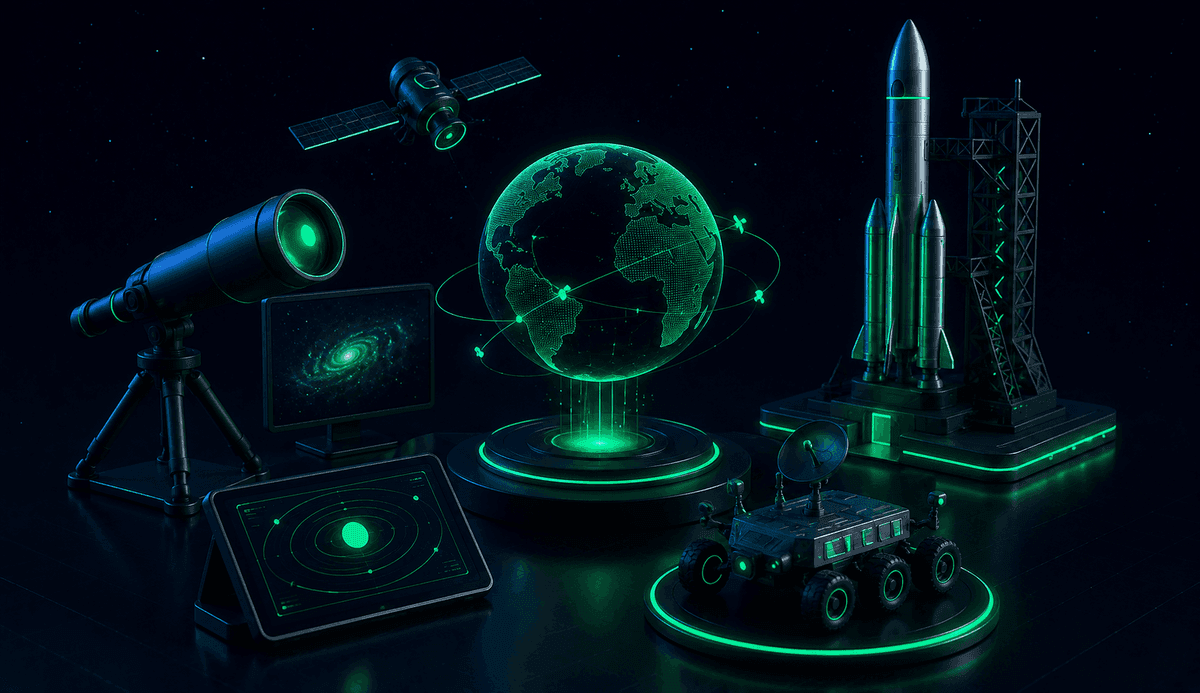
What is the Department of Space Sciences and Technologies? What do its graduates do?

 07.16.2026
What Is the Space Science and Technologies Program? How Can You Become a Space Science and Technologies Specialist?
When you look up at the sky, do you only see the stars, or can you also imagine the technologies of the future? From the navigation systems we use every day to weather forecasting, satellite communications, and space exploration, many of today's essential technologies are powered by space science. As investments in the space industry continue to grow, so does the demand for professionals specializing in this field.
So, what exactly does the Space Science and Technologies program cover? Which industries can graduates work in? What does a Space Science and Technologies Specialist do, and what knowledge and skills are needed to succeed in this field? In this guide, you'll find everything you need to know—from the educational journey to career opportunities.
What Is Space Science and Technologies?
The Space Science and Technologies program is an interdisciplinary bachelor's degree focused on space exploration, spacecraft development, satellite technologies, and the design of space systems. Throughout the program, students receive comprehensive education that combines physics, mathematics, engineering, and computer science.
The curriculum covers not only spacecraft development but also space observation, data analysis, satellite systems, and the application of space technologies across various industries.
Today, professionals in this field are needed in sectors such as defense, telecommunications, aerospace, space research, and satellite technologies.
How Long Is the Space Science and Technologies Program?
The Space Science and Technologies program is generally offered as a four-year bachelor's degree. During their studies, students take core engineering and natural sciences courses alongside specialized theoretical and practical training in space technologies.
The curriculum typically includes subjects such as:
- Physics
- Mathematics
- Astronomy
- Space Systems
- Satellite Technologies
- Programming
- Data Analysis
Many universities also incorporate laboratory work, research projects, and internship programs as integral parts of the educational experience.
What Courses Are Included in the Space Science and Technologies Program?
Course content may vary by university, but the following subjects generally form the foundation of the curriculum:
- General Physics
- Mathematics
- Linear Algebra
- Differential Equations
- Astronomy
- Astrophysics
- Space Mechanics
- Satellite Systems
- Orbital Dynamics
- Programming
- Data Analysis
- Electronics
- Control Systems
- Remote Sensing
- Image Processing
- Engineering Design
These courses provide students with both a strong theoretical foundation and practical experience in space technologies.
What Are the Admission Scores for the Space Science and Technologies Program?
Admission scores and rankings for the Space Science and Technologies program vary each year depending on university quotas, applicant demand, and placement results.
For this reason, there is no fixed admission score. Prospective students should review the latest university entrance guide and compare previous years' rankings when making their choices.
In addition to admission scores, students should also evaluate research infrastructure and hands-on learning opportunities.
What Should You Consider When Choosing a Space Science and Technologies Program in 2026?
Students planning to enroll in the Space Science and Technologies program in 2026 should carefully examine the curriculum and research opportunities offered by each university.
When comparing programs, consider factors such as:
- Laboratory infrastructure
- Collaborations with observatories and research centers
- Faculty expertise
- Internship opportunities
- International research projects
- Satellite development initiatives
- Student research projects
- Graduate career outcomes
Universities that provide strong practical training can offer significant advantages when transitioning into the professional world.
What Do Space Science and Technologies Specialists Study and Specialize In?
A Space Science and Technologies Specialist continues learning long after graduation. Since space technologies evolve rapidly, staying current with scientific and technological developments is essential.
Common areas of specialization include:
- Satellite Systems
- Space Engineering
- Astronomy
- Astrophysics
- Space Data Analysis
- Rocket Systems
- Remote Sensing
- Image Processing
- AI-Powered Space Systems
- Space Mission Planning
Developing expertise in technologies such as Python, MATLAB, data analysis tools, and simulation software can significantly support career growth.
Universities Offering Space Science and Technologies Programs in Türkiye
Although the number of universities offering Space Science and Technologies programs is still limited, academic activity in this field has increased significantly in recent years alongside growing investments in space technologies.
Prospective students should review the latest university entrance guide to identify public and private universities that currently offer the program.
When choosing a university, it is beneficial to evaluate factors such as:
- Research laboratories
- Academic staff
- International research projects
- Satellite development activities
- Industry partnerships
Considering these factors together can provide valuable long-term career advantages.
How Can You Become a Space Science and Technologies Specialist?
Completing a bachelor's degree in Space Science and Technologies provides a strong foundation for this career. In addition, participating in research projects and continuously improving technical skills are essential for long-term success.
Aspiring professionals should:
- Strengthen their mathematics and physics foundations
- Learn programming
- Develop data analysis skills
- Become proficient with simulation tools
- Read technical resources in English
- Participate in research projects
- Work effectively in multidisciplinary teams
- Continuously learn emerging technologies
During university, participating in TÜBİTAK projects, satellite competitions, and international research programs can provide valuable practical experience.
What Does a Space Science and Technologies Specialist Do?
The responsibilities of a Space Science and Technologies Specialist vary depending on the organization they work for, but common tasks include:
- Developing satellite systems
- Performing data analysis for space missions
- Contributing to spacecraft testing processes
- Analyzing observational data
- Creating simulations
- Conducting research on space technologies
- Developing image processing systems
- Designing projects related to emerging space technologies
- Preparing technical reports
- Collaborating with multidisciplinary teams
These professionals may work in government agencies, research centers, defense industry companies, and private space technology organizations.
Career Opportunities and Challenges in Space Science and Technologies
As investments in space technologies continue to increase, career opportunities in Space Science and Technologies are becoming more diverse every year.
Graduates can pursue careers in:
- Space technology companies
- Defense industry organizations
- Satellite manufacturing companies
- Aerospace companies
- Government research institutions
- Universities
- Research and Development (R&D) centers
- Technology startups
However, this field requires advanced technical expertise. Keeping up with scientific developments, improving English proficiency, and maintaining a commitment to lifelong learning are essential for long-term career success.
How Much Does a Space Science and Technologies Specialist Earn?
It is difficult to provide a fixed salary figure for Space Science and Technologies professionals because earnings depend on numerous factors.
Income varies based on experience, area of specialization, employer, project responsibilities, technical expertise, and location. Naturally, a newly graduated engineer will have different earning potential than an experienced specialist who has spent years developing satellite systems or working on advanced space technologies.
Professionals involved in international projects with advanced technical expertise and strong research experience often gain access to broader career opportunities and greater earning potential.
Final Thoughts
Space technologies represent one of the most exciting fields shaping humanity's future. The Space Science and Technologies program provides a strong academic foundation for individuals who enjoy research, analytical thinking, and developing innovative technologies. The theoretical knowledge, laboratory experience, and research projects completed throughout the program can help graduates stand out in the industry.
For professionals who remain curious, continuously develop their skills, and stay up to date with the evolving space ecosystem, this field offers exciting career opportunities both in Türkiye and around the world.
Ready to begin your journey in Space Science and Technologies? Explore the latest Space Science and Technologies Specialist job opportunities on Techcareer.net, discover technology training programs and career opportunities, and start building your future in one of the world's most exciting and rapidly advancing industries today.