What Is a VPN and How Do You Use It? A Guide to Safe Internet Use

 10.06.2026
When connecting to the internet, protecting personal data and connection information becomes increasingly important. A VPN is one of the technologies that can help improve online privacy by routing your internet connection through a different server. In this guide, we will explore what a VPN is, how it works, and what to consider when using one.
What is a VPN?
VPN stands for “Virtual Private Network.” A VPN creates an encrypted connection between your device and a VPN server, allowing your internet traffic to travel through this connection.
With a regular internet connection, your device communicates directly with your internet service provider and the services you access. When you use a VPN, your connection is first routed through a VPN server. As a result, the IP address visible on the internet may be the IP address of the VPN server.
How does a VPN work?
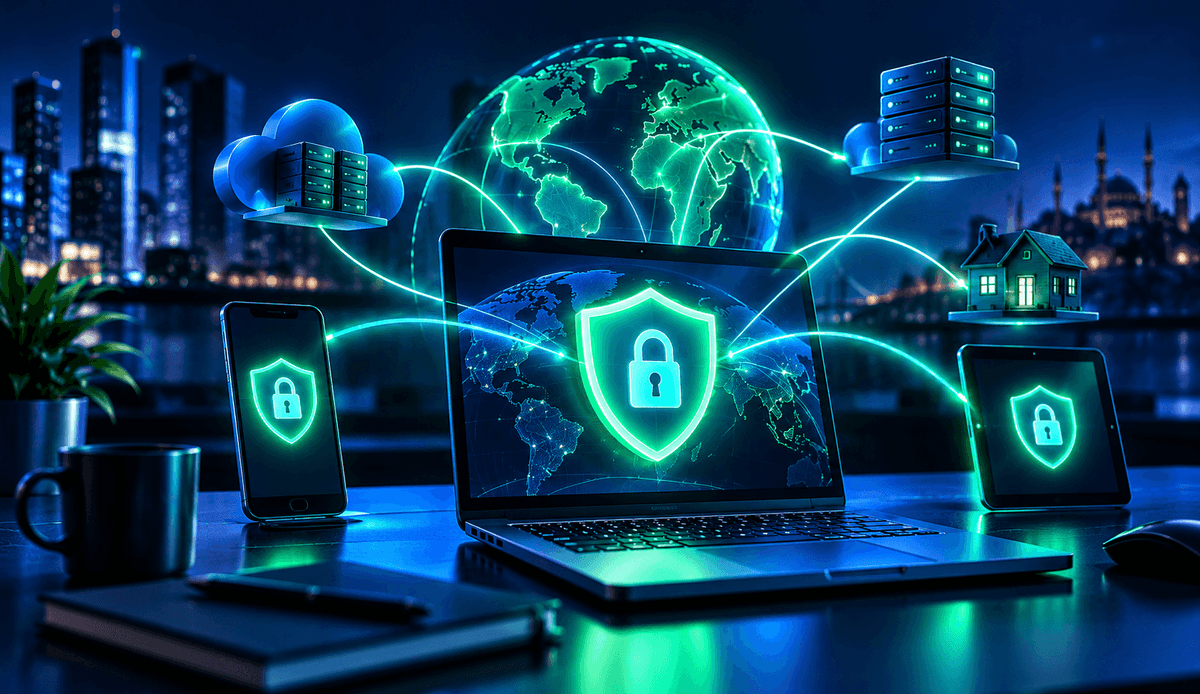
A VPN creates a tunnel between your device and a VPN server. Data sent through this tunnel is protected using specific security protocols. The internet traffic then reaches the target service through the VPN server.
This setup can help improve connection security, particularly when using public Wi-Fi networks. However, using a VPN does not guarantee complete anonymity online.
What is a VPN used for?
The primary purpose of a VPN is to improve the privacy and security of an internet connection. Its use may vary depending on personal preferences and the environment in which the connection is made.
Common uses of VPNs include:
- Protecting the connection: It can help protect connections, especially on public or unfamiliar networks.
- Changing the IP address: It can make the IP address visible online appear to belong to the VPN server.
- Improving privacy: It can prevent internet traffic from traveling directly between the device and the target service.
- Providing remote access: Companies can use VPNs to provide employees with secure access to internal resources.
Is using a VPN safe?
Using a VPN can improve the security of your internet connection when you choose a reliable service and configure it correctly. However, using a VPN does not automatically guarantee a completely secure online experience.
The VPN provider plays an important role in how your connection is technically handled. For this reason, you should review the service's privacy policy, data handling practices, and security features.
A VPN also does not, on its own, protect you against malware, phishing attacks, or unsafe websites. Other security measures, such as keeping your operating system up to date, using strong passwords, and enabling multi-factor authentication, should also be used.
How to use a VPN
To use a VPN, you first need to choose a reliable VPN service. You can then install the service's application on your device according to your operating system.
The general steps are as follows:
- Choose a VPN service: Review factors such as its privacy policy, supported devices, and connection protocols.
- Install the application: Install the VPN application on your device, preferably from the provider's official source.
- Sign in to your account: Complete the account creation or sign-in process required by the service.
- Choose a server: Select a VPN server that suits your needs.
- Start the connection: Use the connection option in the application to activate the VPN.
- Check the connection: Confirm through the application that the VPN is active.
The steps may vary depending on the VPN service and operating system. Therefore, following the application's own instructions is the best approach.
What should you consider when using a VPN?
When choosing a VPN, looking only at connection speed or the number of available servers is not enough. You should also consider how the service handles user data and what security features it provides.
In particular, you can check the following:
- Whether the privacy policy is clear and easy to understand
- Whether data retention practices are clearly explained
- Whether the security protocols used by the service are disclosed
- Whether the application is regularly updated
- Which devices and operating systems are supported
- The service's terms of use and conditions
It is also important to carefully read the terms of free VPN services. Being “free” does not necessarily mean that the service does not collect any data or that all features are available without limitations.
Does a VPN affect internet speed?
Using a VPN can affect your internet connection speed. Factors such as routing the connection through an additional server, the physical location of the server, and the VPN protocol being used can contribute to this change.
Connection performance may vary as the distance between your device and the server increases. Therefore, choosing a server that is geographically closer to you may improve your connection experience during everyday use.
Does a VPN make you completely anonymous online?
A VPN is one of the tools that can improve online privacy, but it does not provide complete anonymity. Websites, applications, and online accounts can collect information about users or devices through different methods.
For example, if you log in to a website using your personal account, using a VPN does not remove the identity associated with that account. Therefore, a VPN should not be considered a tool that eliminates all traces of your online activity.
Which devices can be used with a VPN?
VPN services can generally be used on different devices, including computers, smartphones, and tablets. Some services can also be configured on routers or other network devices.
Supported devices vary from one service to another. When choosing a VPN, you should check whether it supports platforms such as Windows, macOS, Android, iOS, or any other operating system you use.
What is the difference between a VPN and a proxy?
Although both VPNs and proxies can route internet traffic through a different server, they are not the same technology. A proxy generally routes traffic from a specific application or connection, while a VPN can protect a broader range of internet traffic on a device.
VPN services may also use encryption and various security protocols to protect connections. Therefore, whether to use a VPN or a proxy should be determined based on your specific needs.
Is using a VPN legal?
The rules regarding VPN use vary from country to country. Therefore, before using a VPN service, you should check the current laws of the country you are in as well as the service's terms of use.
Although a VPN is a security and privacy technology, it is important to evaluate its use in accordance with applicable laws and the service's terms and conditions.
A VPN is a tool that can be used to improve the privacy and security of an internet connection. However, it is not a comprehensive cybersecurity solution on its own. Choosing a reliable service, reviewing its privacy practices, and using it together with basic security measures can provide a safer internet experience.