What Is Web3? An Introduction to Blockchain Technology

 09.14.2026
Web3 is a next-generation internet approach that aims to manage digital assets and data across the internet in a more distributed manner. In this article, we will explore what Web3 is, how blockchain works, its key components, and the differences between Web3 and Web2.
What is Web3?
Web3 refers to an approach that aims to make the internet more decentralized and user-centric. The term “decentralized” describes the ability to manage data and transactions across distributed networks rather than through systems controlled by a single organization.
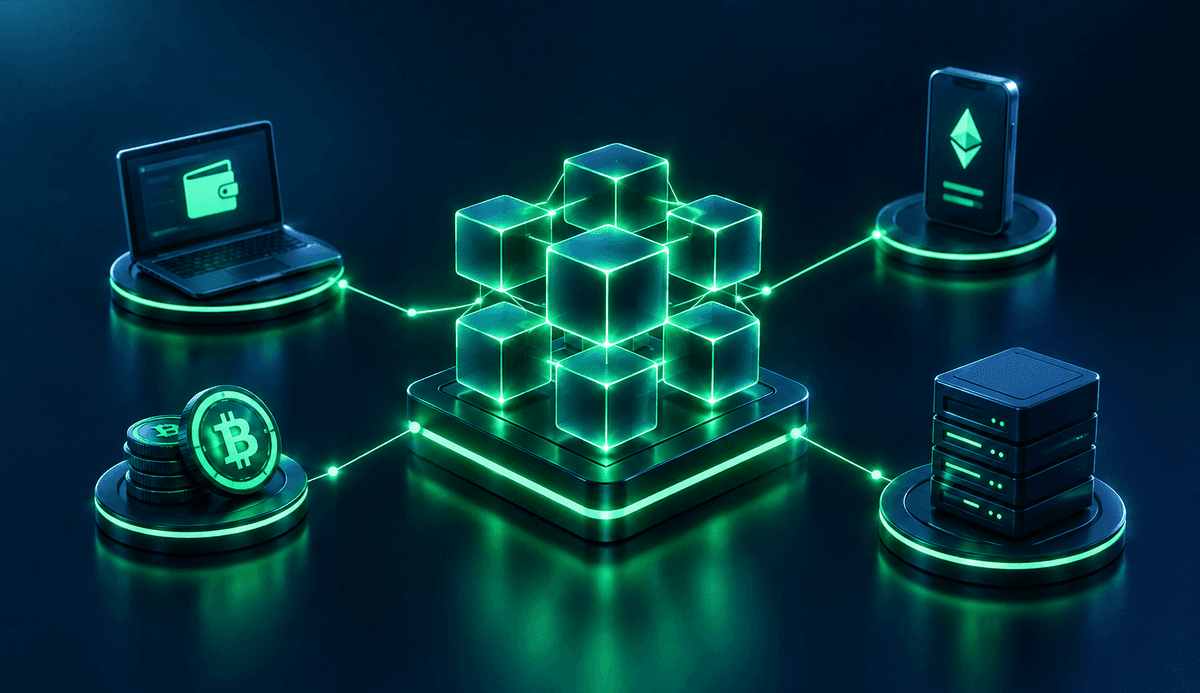
Blockchain technology is at the core of Web3. Blockchain enables transactions to be verified by different computers on a network and records to be stored in a distributed manner.
Web3 is not limited to blockchain alone. Other technologies, including decentralized applications, smart contracts, and digital assets, are also important components of the Web3 ecosystem.
What is Blockchain?
Blockchain is a distributed data structure in which digital records are stored in interconnected blocks. Specific rules and mechanisms within the network are used to validate records added to the blockchain.
Each block is created in a way that connects it to the previous block. This structure makes it easier to track records along with their history and eliminates the need to store data in a single centralized location.
The way blockchains operate can vary depending on the technology used. Therefore, it would not be accurate to assume that all blockchains have the same features or use the same validation methods.
How Does Web3 Work?
In Web3 applications, users can interact directly with blockchain-based systems rather than conducting transactions through a centralized platform. Transactions are validated according to the rules of the network and, when appropriate, recorded on the blockchain.
Digital wallets are one of the key elements of this structure. Wallets help users manage their digital assets on the blockchain and interact with Web3 applications.
The following components typically play a role in how Web3 applications work:
- Blockchain: Enables transactions and certain types of data to be recorded on a distributed network.
- Digital wallet: Helps users interact with blockchain-based applications.
- Smart contract: Code that can automatically execute specific actions when predetermined conditions are met.
- Decentralized applications: Applications that leverage blockchain infrastructure.
What is the Difference Between Web2 and Web3?
Web2 is the era of the internet that forms the foundation of the social media platforms, content services, and online services we widely use today. In these systems, platforms can manage user accounts, content, and data through centralized systems.
The Web3 approach aims to shift some control from centralized platforms to distributed networks and users. However, this does not mean that Web3 applications cannot include any centralized services.
The key differences between the two approaches can be summarized as follows:
| Feature | Web2 | Web3 |
|---|---|---|
| Structure | More centralized | More distributed |
| Data management | Platforms play a significant role | Distributed networks can be used |
| User identity | Usually based on platform accounts | Structures such as digital wallets can be used |
| Applications | Primarily based on centralized servers | Blockchain-based applications can be used |
| Digital assets | May be tied to a platform | Can be represented on a blockchain |
Web2 and Web3 are not technologies that completely exclude each other. Today, applications can also be developed using components of both approaches.
What Are the Key Components of Web3 Technologies?
The Web3 ecosystem consists of different technologies working together. While blockchain provides the underlying infrastructure, smart contracts and decentralized applications make it possible to use this infrastructure in different ways.
Key components include:
- Blockchain networks: Provide the infrastructure where transactions are recorded in a distributed manner.
- Smart contracts: Programmable code that operates according to predefined rules.
- Digital wallets: Allow users to interact with Web3 applications.
- Tokens: Can represent a value, right, or digital asset on a blockchain.
- DApps: Decentralized applications that leverage blockchain infrastructure.
How these components are used can vary depending on the project and the underlying blockchain infrastructure.
What Are the Use Cases of Web3?
Web3 technologies can be used to create different types of digital experiences. Blockchain-based projects are being developed across various fields, ranging from financial applications and digital identity solutions to gaming and digital asset management.
For example, digital assets within a game can potentially be represented on a blockchain. Similarly, projects can use tokens to represent certain digital rights or memberships.
Some of the prominent use cases of Web3 include:
- Decentralized finance applications
- Blockchain-based games
- Digital collectibles
- Digital identity solutions
- Token-based membership systems
- Decentralized applications
- Digital asset management
What Are the Advantages of Web3?
One of the key characteristics of Web3 is that, in some applications, users can have more direct control over their digital assets and transactions. Distributed infrastructures can help reduce reliance on a central authority for certain services.
In addition, recording blockchain transactions in a verifiable manner can provide transparency in certain use cases. However, these advantages do not necessarily apply in the same way to every Web3 project.
What Are the Disadvantages of Web3?
While Web3 technologies introduce new ways of using digital services, they also come with certain technical and user experience challenges. The scalability of blockchain infrastructures, communication between different networks, and user experience are some of these challenges.
Web3 applications may also introduce new processes that users are not familiar with, such as digital wallet and key management. For this reason, a clear and secure user experience is just as important as the technical infrastructure when it comes to the success of a Web3 application.
Why is Web3 Important?
Web3 offers an alternative approach to how internet services can be developed. Blockchain technology makes it possible to manage digital assets, transactions, and certain application rules on distributed infrastructures.
The future of Web3 will depend not only on technological development but also on improvements in user experience and the adoption of applications designed to address real-world needs. For this reason, understanding Web3 can be an important starting point for anyone interested in following new blockchain-based technologies.
Web3 is an internet approach that brings together technologies such as blockchain, smart contracts, digital wallets, and decentralized applications. Rather than completely replacing Web2, it offers different models for using and building digital services. As blockchain technology continues to evolve, the use cases for Web3 applications are also expected to diversify.