Voice Cloning with Artificial Intelligence: Use Cases and Risks

 09.17.2026
AI voice cloning makes it possible to create a synthetic voice that resembles a person’s voice by analyzing their vocal characteristics. In this article, we will explore how voice cloning works, where it is used, its advantages, and what to consider for safe use.
What is AI voice cloning?
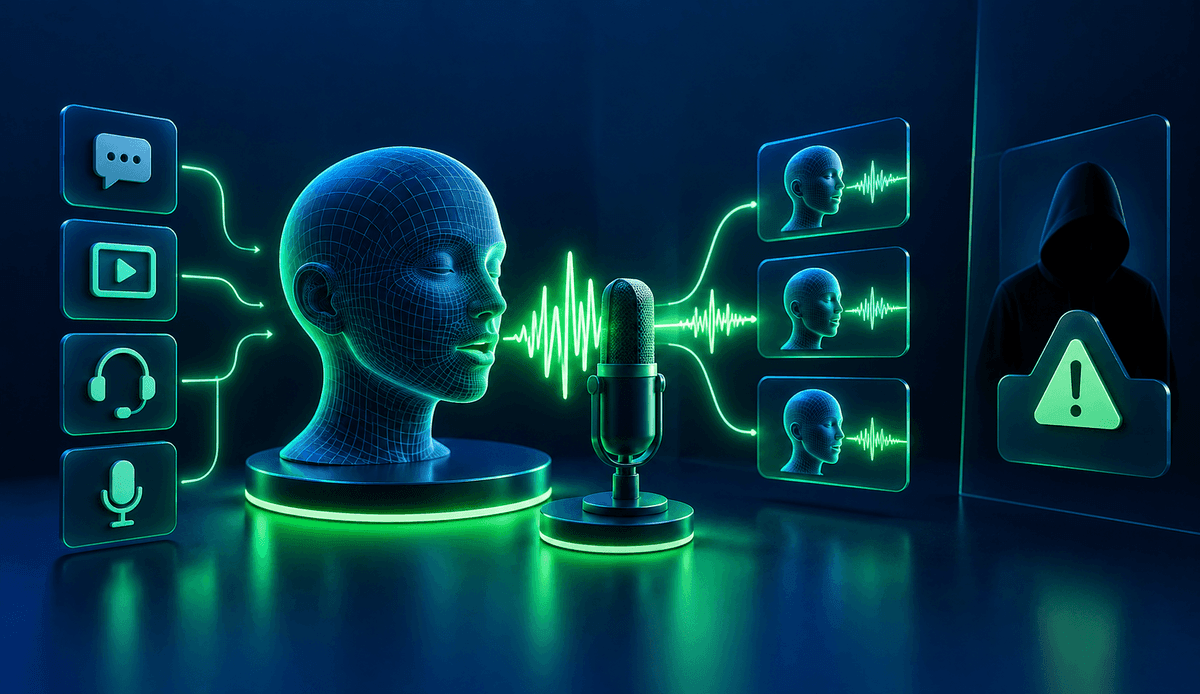
AI voice cloning is a technology that analyzes characteristics such as tone, rhythm, intonation, and speech patterns to create voice outputs that resemble a person’s voice. This process typically relies on machine learning and audio processing models.
The system learns specific characteristics from provided voice recordings. It can then convert written text or another input into speech that resembles the learned vocal characteristics.
Voice cloning and Text-to-Speech (TTS) technologies are closely related. However, voice cloning can focus specifically on replicating the characteristics of a particular voice rather than simply converting text into speech.
How does AI voice cloning work?
The way voice cloning systems work can vary depending on the model and technology being used. In general, the system analyzes voice recordings to identify characteristics associated with the speaker’s voice.
A simplified process consists of the following stages:
- Collecting voice data: Voice recordings of the speaker are provided to the system.
- Voice analysis: The tone, pitch, rhythm, and other characteristics of the voice are analyzed.
- Modeling: The AI model creates a representation of the voice characteristics.
- Voice generation: The model can convert new text into speech using similar voice characteristics.
- Output evaluation: The quality and accuracy of the generated voice are evaluated.
The amount of voice data required and the quality of the results can vary depending on the technology being used. Therefore, not every voice cloning system produces the same results.
Where is AI voice cloning used?
Voice cloning can be used in various areas, from creative production to accessibility solutions. The nature of the use case also determines how the technology should be implemented.
Some common use cases include:
- Content creation: Voiceovers for videos, podcasts, and digital content.
- Education: Voiceovers for course content and digital learning materials.
- Gaming: Creating different voice content for characters.
- Advertising and media: Supporting voiceover processes for promotional content.
- Accessibility: Helping convert text into audio content.
- Digital assistants: Developing voice interfaces that personalize the user experience.
- Localization: Recreating content in different languages or with different voice characteristics.
When using the technology in these areas, the rights of the voice owner and any necessary permissions should be taken into consideration.
How is voice cloning used in content creation?
Voice cloning can help content creators simplify the voiceover process. For example, a previously prepared script can be converted into speech using a specific voice profile.
This method can save time, particularly for content that needs to be updated frequently. However, in addition to the naturalness of the generated voice, it is important to consider who the voice belongs to and whether the necessary permissions for its use have been obtained.
In professional content, there may be differences in quality and naturalness between an AI-generated voice and a real human voice. Therefore, generated outputs should be reviewed before publication.
What are the advantages of voice cloning?
Voice cloning technology can provide speed and flexibility in voice production processes. It can be particularly useful for projects that require large amounts of audio content in a consistent format.
Key advantages include:
- Simplifying repetitive voiceover tasks
- Preparing different types of content more quickly
- Scaling audio content production
- Supporting voiceovers for educational and media content
- Creating personalized voice experiences in digital products
The extent to which these advantages can be achieved depends closely on the quality of the model and how well the project is designed.
What are the risks of AI voice cloning?
One of the key risks of voice cloning technology is that a person’s voice can be replicated without their permission. Synthetic voices that resemble real people may cause listeners to be misled about the source of the voice.
Relying solely on the authenticity of a voice can be risky, particularly in situations involving identity verification, money transfers, or sensitive communications. Additional methods can therefore be used to verify the source of a voice communication.
Key risks include:
- Unauthorized use of a person’s voice
- Identity impersonation
- Creation of misleading or fraudulent content
- Misuse of personal data
- Issues related to copyright and personality rights
- Increasing difficulty in distinguishing AI-generated voices from real voices
Because of these risks, the intended use of the technology and how the collected data is processed are important considerations.
What is the difference between voice cloning and deepfakes?
Deepfake is a general term used to describe content in which a person’s image, voice, or both are realistically manipulated or replicated using artificial intelligence. Voice cloning focuses more specifically on replicating a person’s voice.
In other words, voice cloning can be one of the techniques used in deepfake content. However, not every voice cloning application is deceptive or malicious deepfake content.
Voice cloning technology can also be used in legitimate scenarios such as education, accessibility, and content creation.
What should you consider when using voice cloning?
When using voice cloning technology, the first considerations should be the voice owner’s consent and the intended purpose of use. Copying another person’s voice without permission can lead to legal and ethical issues.
It is also important to consider how voice recordings are stored and for what purposes they are processed. When working with recordings that may contain personal data, the data processing and storage practices of the service being used should be reviewed.
For a safer approach to using voice cloning, consider the following:
- Obtain the necessary consent from the voice owner.
- Clearly define the purpose for which the voice recordings will be used.
- Review the data policies of the platform being used.
- Avoid unnecessarily sharing sensitive voice recordings.
- Maintain transparency when using AI-generated content.
- Use additional verification methods for voice communications.
How can you distinguish an AI-generated voice?
As AI voice technologies continue to improve, it is not always easy to distinguish an AI-generated voice from a real human voice. Some synthetic voices may contain unnatural elements in areas such as intonation, emphasis, breathing, or speech rhythm.
However, relying solely on listening to a voice is not a reliable way to reach a definitive conclusion. When an important request or suspicious communication is involved, verifying it through another channel can be a safer approach.
For example, an unexpected voice request that claims to come from a relative or an employee of an organization can be independently verified through known communication channels.
What might the future of AI voice cloning look like?
As voice cloning technologies continue to develop, more natural and personalized voice experiences may emerge. New use cases may appear across areas such as education, media, gaming, accessibility, and digital assistants.
At the same time, technological progress will increase the importance of issues such as protecting voice data and identifying AI-generated content. Alongside technical developments, principles such as consent, transparency, and safe use will also play an important role in shaping the future of this field.
AI voice cloning is a powerful technology that can be used in many areas, including content creation, education, gaming, and accessibility. However, it also carries risks such as unauthorized voice use, identity impersonation, and misleading content. Consent, data security, and verification processes are therefore important for using the technology safely.