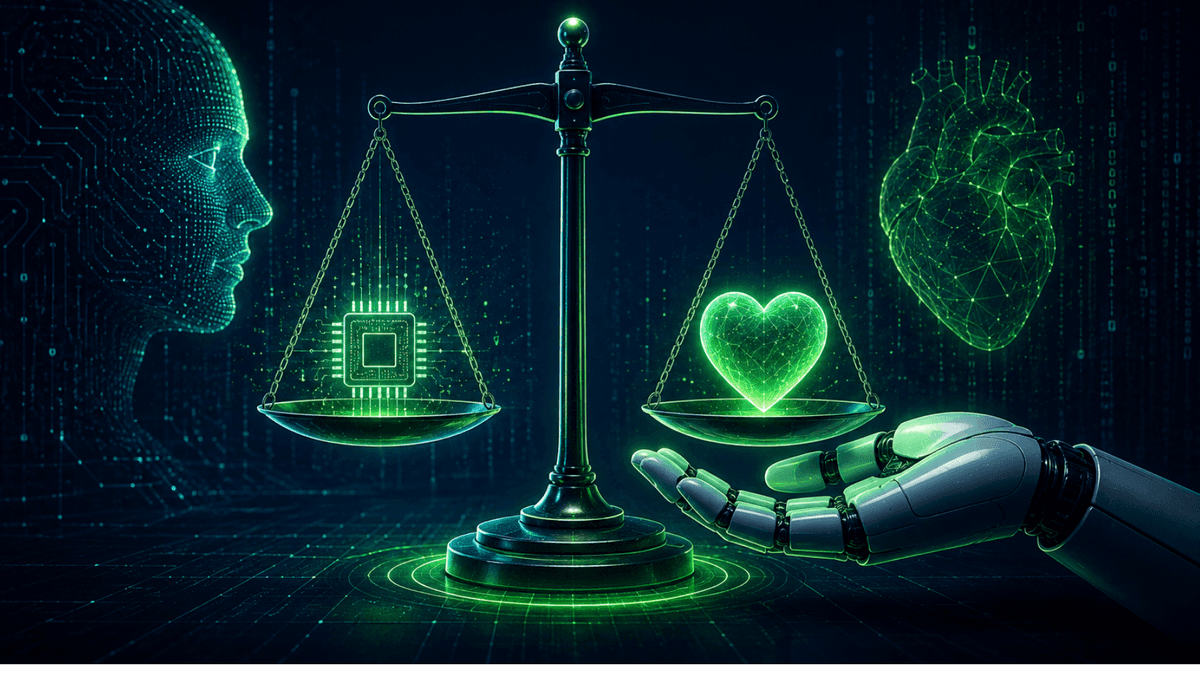
MAY 25 WORLD ETHICS DAY

 25.05.2026
In no period of human history has technology become as central to life as it is today. From the moment we wake up, we hold our phones in our hands, follow algorithms that guide us throughout the day, scroll through social media feeds that influence our decisions, and increasingly rely on artificial intelligence systems that are gaining authority in more and more areas of life.
Amid this rapid transformation, one concept is being discussed more loudly every year: ethics.
World Ethics Day on May 25 is not merely a symbolic occasion that reminds us of personal morality or social rules; it is also seen as an important opportunity to question the impact of the digital age on humanity. Especially in the technology world, dizzying developments have transformed the concept of “ethics” from an academic debate into a global necessity.
Technology Is Rewriting Human Life
In recent years, the development of artificial intelligence technologies has begun to transform almost every aspect of human life. Algorithms now play an active role in many sectors, from banking and education to healthcare and security systems.
Today, some companies use AI-supported systems to evaluate candidates during recruitment processes. Hospitals benefit from data analysis in diagnostic procedures. Social media platforms analyze user behavior to decide which content should be shown more frequently.
However, these developments bring with them a fundamental question:
Are these systems truly fair?
According to experts, artificial intelligence systems can only be as unbiased as the data they are trained on. If the datasets contain prejudice, algorithms may reproduce the same biases. This creates serious ethical concerns, especially in critical areas such as recruitment, credit evaluation, security analysis, and public services.
The Invisible Danger in the Digital World: The Age of Data
Today, personal data is considered one of the most valuable resources of the digital economy. What people watch, what they buy, where they are located, and even which topics interest them are analyzed by big data systems.
Experts state that users leave behind massive digital footprints, often without realizing it. This situation has made discussions about data security and privacy more important than ever before.
Major data breaches in recent years have shown that the personal information of millions of people can be put at risk. According to cybersecurity experts, unethical use of data could become one of the greatest global problems of the future.
How technology companies collect, store, and use user data is no longer merely a technical issue; it is also regarded as a matter directly connected to human rights.
Artificial Intelligence and the Debate on “Digital Conscience”
With the widespread adoption of generative AI systems, ethical debates have entered a new dimension. Today, highly realistic images, fake videos, and audio recordings almost indistinguishable from human voices can be created within seconds.
Many countries are currently working on new regulations for artificial intelligence systems. Technology experts suggest that AI systems failing to comply with ethical standards may face serious sanctions in the future.
In the technology world, being “innovative” alone is no longer considered sufficient. Companies are now expected to develop systems that are:
- transparent,
- accountable,
- human-centered,
- secure.
- Social Media and the Power of Algorithms
One of the greatest ethical debates of the digital age revolves around social media platforms. Today, the agenda of billions of people is largely shaped by algorithms.
Experts argue that social media systems often prioritize content that triggers emotional reactions in order to keep users on platforms longer. This can increase:
- polarization,
- misinformation,
- digital addiction,
- hate speech.
The constant stream of short videos and endless notifications, especially among younger users, is also being discussed in terms of psychological effects.
Psychologists and digital ethics experts argue that technology companies should focus not only on user numbers but also on social impact.
A New Era in Education
Ethical discussions surrounding technology are transforming not only companies but also education systems. Universities around the world are now placing greater emphasis on ethics courses in engineering and software education.
According to experts, future software developers will not only write code; they will also have to consider the societal impact of the technologies they create.
Ethical standards are expected to become even more important in the coming years, especially in areas such as:
- Artificial intelligence engineering
- Robotics technologies
- Biotechnology
- Cybersecurity
- Data science
- Autonomous systems
Academics emphasize that “ethical literacy” will become one of the most important competencies of the future.
Trust Will Define the Future of Technology
According to experts, the greatest competition of the digital age will no longer revolve solely around speed and innovation. Users will increasingly gravitate toward systems they can trust.
Therefore, in the coming years, concepts such as:
- ethical compliance,
- data transparency,
- user security,
- respect for human rights
are expected to become much more decisive for technology companies.
Because today, people no longer want only technologies that “work well”; they also want systems that “work right.”
The Message of World Ethics Day
World Ethics Day on May 25 reminds us once again of the importance of protecting human values at the center of digitalization.
Technology is becoming more powerful every day. However, according to experts, the real issue is not how advanced technology becomes, but how people choose to use it.
Because the future will not be shaped solely by artificial intelligence systems, algorithms, or data centers.
The future will be shaped by the conscience of the people who guide technology.