Google’s AI-Powered Avatar Technologies Become a Trending Topic on Social Media!

 25.06.2026
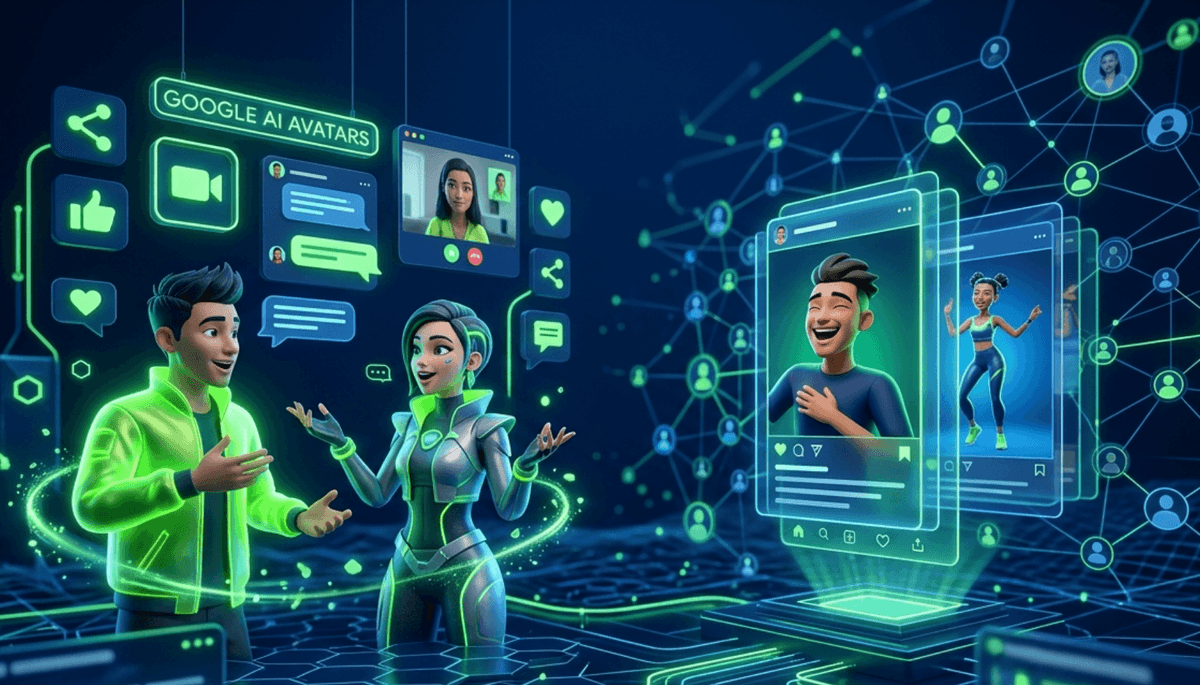
Google’s AI-powered video and avatar technologies continue to attract attention in the tech world, offering users the ability to create digital representations of themselves using their own voice and visual data. Examples shared on social media have reignited discussions about the transition into the era of digital twins.
Rapid advancements in artificial intelligence continue to fundamentally transform content creation methods. Google’s AI-based tools are among the key drivers of this transformation. Recently, avatar and digital representation technologies have gained prominence by enabling users to recreate themselves in digital environments.
How Do Digital Avatar Technologies Work?
Google’s AI systems can generate personalized digital characters based on short video and voice recordings provided by users. These systems analyze facial features, expressions, and voice tone to create a highly realistic digital representation of a person.
These digital avatars can then be used in AI-powered video production processes and adapted to various scenarios.
A New Era in Content Creation
Experts suggest that AI-based avatar technologies may bring significant changes, especially in social media content creation, education, marketing, and corporate communication.
The ability to create content without appearing in front of a camera is seen as a major development that can speed up production processes while also reducing costs. Multilingual content creation is also highlighted as one of the key advantages of this technology.
Security Concerns and Ethical Discussions
The emergence of highly realistic digital avatars has also raised renewed concerns about AI-related security and ethical issues.
Experts emphasize the importance of caution regarding potential misuse of such technologies, while technology companies are reportedly working on digital watermarking, verification systems, and other security mechanisms.
The Future of AI-Driven Content Creation
AI-powered avatar and video generation technologies are expected to become more widespread in the coming years. These systems are projected to be used across a wide range of fields, including education, digital marketing, customer services, and social media content production.
Google’s AI tools are seen as an important part of this transformation, playing a key role in shaping the future of digital content creation.