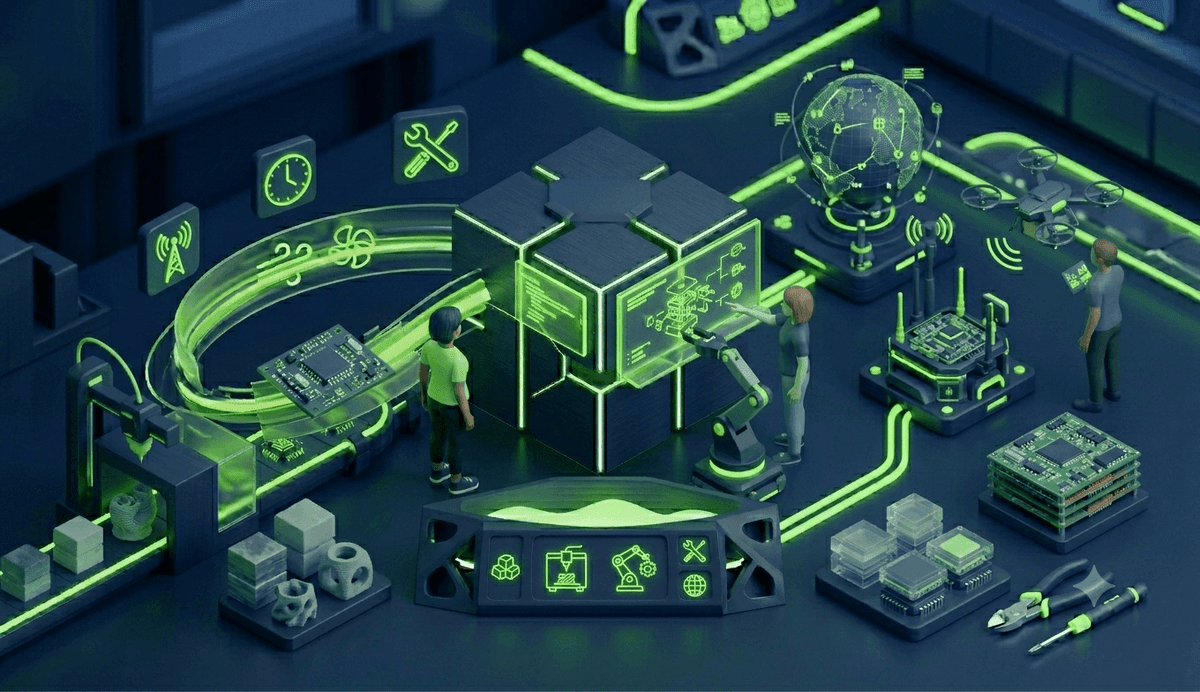
What is Manufacturing Engineering? What do its graduates do?

 06.23.2026
What Is Manufacturing Engineering? How Do You Become a Manufacturing Engineer?
Have you ever wondered how a car, smartphone, household appliance, or any product you use every day is manufactured? From the initial design stage to production lines, quality control processes, and final delivery to customers, a critical engineering discipline plays a key role throughout the journey. This is where Manufacturing Engineering comes into the picture.
Today, with the rise of Industry 4.0, automation, artificial intelligence, and smart manufacturing systems, production processes have become more sophisticated and efficient than ever before. In this article, we will explore what Manufacturing Engineering is, what Manufacturing Engineers do, the duration of education, courses, career opportunities, and much more.
What Is Manufacturing Engineering?
Manufacturing Engineering is an engineering discipline focused on ensuring that products are produced in the most efficient, high-quality, and cost-effective way possible. It is closely related to fields such as Mechanical Engineering, Materials Science, Production Technologies, and Industrial Engineering.
A Manufacturing Engineer plans, develops, optimizes, and improves production processes while solving technical challenges encountered during manufacturing. The goal is not only to produce products but also to manufacture them faster, with higher quality, and at lower costs.
Manufacturing Engineers play a vital role in industries such as automotive, defense, aerospace, consumer electronics, energy, and home appliances.
How Long Is a Manufacturing Engineering Degree Program?
Manufacturing Engineering is typically offered as a four-year undergraduate degree program within engineering faculties.
Throughout their education, students gain both theoretical and practical knowledge in areas such as:
- Fundamental engineering sciences
- Manufacturing technologies
- Materials science
- Quality control systems
- Computer-aided manufacturing techniques
Some universities may also offer an English preparatory year, extending the total study period to five years.
What Courses Are Included in Manufacturing Engineering?
Although course content may vary by university, Manufacturing Engineering programs generally include subjects such as:
- Mathematics
- Physics
- Chemistry
- Technical Drawing
- Computer-Aided Design (CAD)
- Materials Science
- Manufacturing Processes
- Machining Technologies
- Welding Technologies
- Quality Control
- Thermodynamics
- Fluid Mechanics
- CNC Technologies
- Robotic Manufacturing Systems
- Industrial Automation
- Production Planning and Control
In recent years, courses related to digital manufacturing technologies, AI-powered production systems, and data analytics have also become increasingly common.
What Are the Admission Scores for Manufacturing Engineering?
Admission scores and rankings for Manufacturing Engineering programs vary every year. Therefore, providing a single score would not be accurate.
Factors affecting admission requirements include:
- University quotas
- Program popularity
- Number of applicants
- Difficulty level of entrance examinations
Prospective students should always refer to the latest university admission guides and official announcements during the application period.
What Should You Consider When Choosing a Manufacturing Engineering Program in 2025?
When selecting a university, focusing solely on admission scores is not enough. The opportunities and resources offered by the institution are equally important.
Key factors to evaluate include:
- Laboratory and workshop facilities
- Industry partnerships
- Internship opportunities
- Academic staff expertise
- Erasmus and international exchange programs
- Alumni career achievements
- Industrial infrastructure in the surrounding region
Since Manufacturing Engineering is highly application-oriented, access to hands-on learning opportunities provides a significant advantage.
What Do Manufacturing Engineers Study and Specialize In?
Manufacturing Engineers can develop expertise in various specialized fields throughout their education and careers.
Some common specialization areas include:
- Manufacturing Technologies
- Quality Management
- CNC and Machining Processes
- Robotics Systems
- Industrial Automation
- Welding Technologies
- Materials Engineering
- Lean Manufacturing
- Digital Factory Systems
- Industry 4.0 Applications
Smart manufacturing systems and data-driven production processes are widely regarded as some of the most promising areas for future specialization.
Universities Offering Manufacturing Engineering Programs in Türkiye
Manufacturing Engineering programs are offered by a limited number of universities in Türkiye. Some well-known institutions include:
- Gazi University
- Sakarya University
- Karabük University
- Istanbul Gedik University
- Bursa Uludağ University
Students should always verify the most up-to-date program information and quotas during the university selection process.
How Do You Become a Manufacturing Engineer?
To become a Manufacturing Engineer, you must graduate from a Manufacturing Engineering bachelor's degree program.
However, earning a degree alone may not be sufficient for building a successful career. Students are encouraged to invest in the following areas during their university years:
- Completing technical internships
- Learning CAD/CAM software
- Developing CNC technology skills
- Improving English proficiency
- Gaining experience in production and quality management
- Learning ERP and production planning systems
Software commonly used in the industry includes AutoCAD, SolidWorks, CATIA, and Siemens NX.
What Does a Manufacturing Engineer Do?
One of the most frequently asked questions by prospective students is: "What does a Manufacturing Engineer do?"
Typical responsibilities may include:
- Planning manufacturing processes
- Reducing production costs
- Increasing operational efficiency
- Establishing quality standards
- Improving manufacturing equipment
- Optimizing production lines
- Leading process improvement projects
- Analyzing production data
- Developing automation systems
Depending on their role, Manufacturing Engineers may work in factories, R&D centers, or project management teams.
Career Opportunities and Challenges in Manufacturing Engineering
The manufacturing sector forms the backbone of both the Turkish and global economies. As a result, career opportunities for Manufacturing Engineers are extensive.
Potential industries include:
- Automotive
- Defense Industry
- Aerospace and Aviation
- Home Appliance Manufacturing
- Energy
- Metal and Steel Production
- Plastics and Composite Manufacturing
- Electronics Manufacturing Facilities
Like any profession, the field also presents certain challenges. Manufacturing environments often operate under strict deadlines, and balancing quality, cost, and delivery requirements may require working in a fast-paced setting.
Nevertheless, for individuals who enjoy technology, problem-solving, and continuous improvement, Manufacturing Engineering can be an extremely rewarding career path.
How Much Does a Manufacturing Engineer Earn?
It is difficult to provide a fixed salary figure for Manufacturing Engineers because earnings vary significantly depending on several factors, including:
- Professional experience
- Area of specialization
- Industry sector
- Company size
- Geographic location
- Technical competencies
Naturally, a newly graduated engineer and a professional with ten years of experience will have different earning levels. Similarly, engineers working in defense, automotive, or high-tech manufacturing industries may receive different compensation packages.
Therefore, when planning a career, it is more beneficial to focus not only on salary expectations but also on technical development opportunities, specialization potential, and long-term career growth.
Final Thoughts
The future of manufacturing is no longer driven solely by machines—it is powered by data, automation, and intelligent systems. Manufacturing Engineering sits at the center of this transformation. Manufacturing Engineers play a critical role throughout the journey from product design to mass production, helping organizations improve efficiency, innovation, and competitiveness.
If you are interested in production processes, enjoy solving technical challenges, and want to transform engineering knowledge into real-world products, Manufacturing Engineering can offer an exciting and rewarding career path.
Ready to take the first step toward your Manufacturing Engineering career? Explore the latest Manufacturing Engineer job opportunities on Techcareer.net and start shaping your future today!