The Benefits of Developing a Side Project for Your Career

 09.24.2026
A side project can be defined as a personal project developed alongside a main job or educational process. In this article, we will examine how developing side projects can contribute to technical skills, portfolios, problem-solving abilities, and career development.
What is a side project?
A side project is a project that a person develops for their own purpose outside of their work, school, or daily responsibilities. In software development, a small web application, mobile application, automation tool, or open-source contribution can be an example of a side project.
Side projects do not necessarily have to be large or commercial products. What matters is identifying a specific problem, developing a solution, and applying what has been learned throughout the project.
How can developing a side project contribute to a career?
Developing a side project helps turn theoretical knowledge into practical experience. It can be particularly useful in fields such as software development, where continuous practice is important, by allowing individuals to experiment with different technologies.
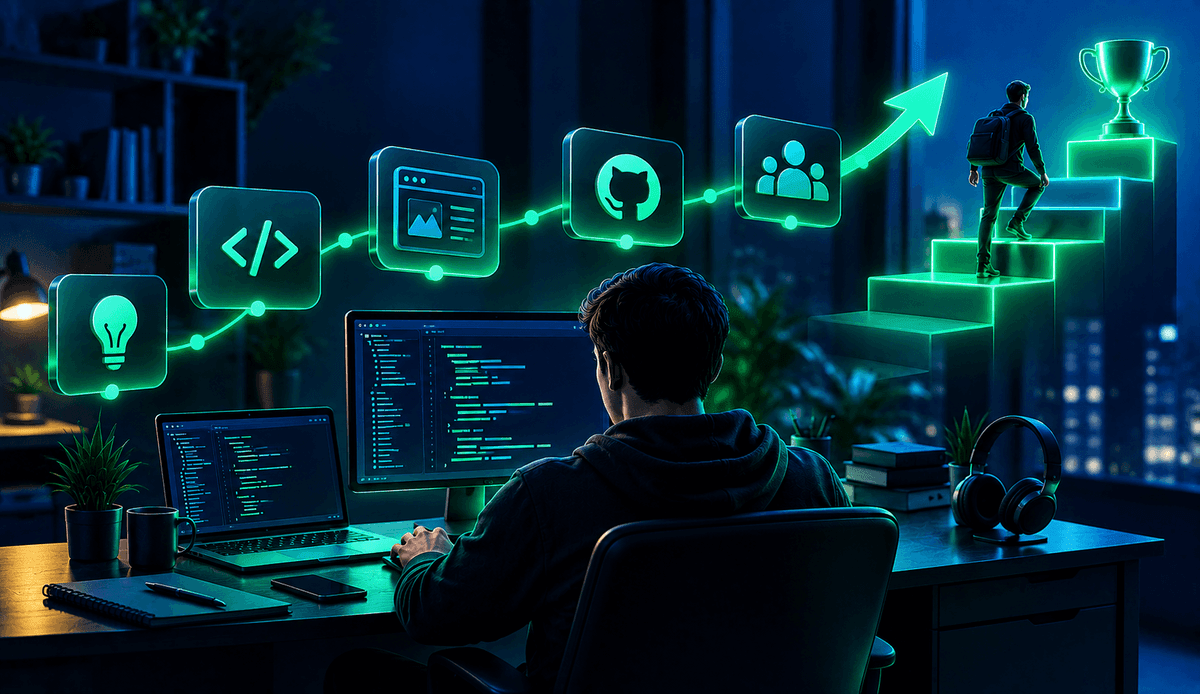
Turning a project from an idea into a working product can improve not only technical skills but also skills such as planning and problem-solving. These experiences can create tangible work that can be presented and evaluated throughout a career journey.
How can a side project contribute to a portfolio?
A portfolio is one of the ways people can showcase their work and demonstrate their skills. Side projects can be used to provide concrete examples of how different technologies have been applied.
For example, instead of simply stating that you know a programming language, sharing a project developed with that language can make the scope of your work more understandable.
The following information can be useful to include in a portfolio project:
- The problem the project aims to solve
- The technologies used
- The main features of the project
- Problems encountered during development
- How users or visitors can try the project
- A link to the relevant repository, if the source code is publicly available
How do side projects improve technical skills?
When learning a technology, starting with courses or documentation is an important first step. However, developing a real project requires applying what has been learned to different problems.
For example, a developer learning a new programming language can use it to build a simple application. As the project progresses, they may encounter different topics such as data management, error handling, user interfaces, or API usage.
This process helps turn theoretical knowledge into practical experience.
How do side projects improve problem-solving skills?
When developing a real project, not everything may go according to plan. A feature may not work as expected, a technology may not meet the project's requirements, or an existing approach may need to be changed.
These situations require developers to break problems down into smaller parts and evaluate different solutions. As a result, they can develop not only their coding skills but also their ability to analyze problems they encounter.
Can a side project help you learn new technologies?
Side projects can be used to experiment with new technologies in a controlled environment. A person can explore the basic use cases of a technology they do not use in their daily work by trying it in their own project.
For example, a developer may want to learn a database technology, frontend library, or cloud service in addition to their existing area of expertise. A side project can provide a suitable environment for experimenting with that technology in a real-world use case.
However, adding too many new technologies to the same project can make the learning process unnecessarily complex. For this reason, it may be more useful to focus on technologies that are relevant to the project's goals.
How do side projects support creativity?
In personal projects, developers can define their own problems and solutions instead of working from a predefined task. This creates room for experimenting with different ideas and evaluating alternative approaches.
For example, a tool can be developed to automate a small problem encountered in everyday life. In this way, technology becomes more than something to learn; it becomes a tool for solving a problem.
What should you consider when developing a side project?
A side project does not have to be extensive or professional in scale to be useful. Especially for early projects, setting an achievable goal can increase the likelihood of completing the project.
The following points can be considered when planning a project:
- Define a small and clear problem.
- Choose technologies based on the project's purpose.
- Focus on core features in the initial stage.
- Develop the project consistently.
- Keep the code and project documentation up to date.
- Add completed work to your portfolio.
The goal is not to produce as many projects as possible, but to create work that supports the learning process and can be completed.
How can you find side project ideas?
To find a side project idea, you can start by looking at problems encountered in everyday life. Solving a small problem that you personally experience can make it easier to define the scope of the project.
For example, a developer can build a simple application to track personal tasks. Someone interested in data analysis can create a visualization project using public datasets. A beginner can use basic programming skills to build a small calculation or tracking application.
How can a side project be used when changing careers?
For people who want to move into a different technology field, side projects can provide an opportunity to apply skills in the new area. For example, a backend developer who wants to move into frontend development can build a personal project focused on user interfaces.
In this process, the project can serve not only as a learning tool but also as a portfolio piece that showcases work related to the new field. This allows the learning process to be supported with tangible projects.
What is the difference between a side project and an open-source contribution?
A side project can be an independent project developed by an individual. An open-source contribution, on the other hand, involves contributing code, documentation, bug reports, or other forms of support to a project that is also developed by others.
These two approaches can provide different types of experience. A personal project offers an opportunity to develop an idea from beginning to end, while open-source work can help individuals understand an existing codebase and experience processes similar to collaborative development.
Developing a side project can create a practical learning environment that supports career development. Projects that start with a small idea and are successfully completed can help individuals apply technical skills, strengthen their portfolios, and gain practical problem-solving experience.